
IIT JEE Exam Dates, Syllabus & Preparation Strategy | JEE Main & Advanced Guide
Engineering continues to be one of the most sought-after career paths in India, and for students targeting top institutes, the journey begins with IIT JEE. Known for its competitiveness and depth, IIT JEE is not just about clearing an exam—it’s about proving your con…
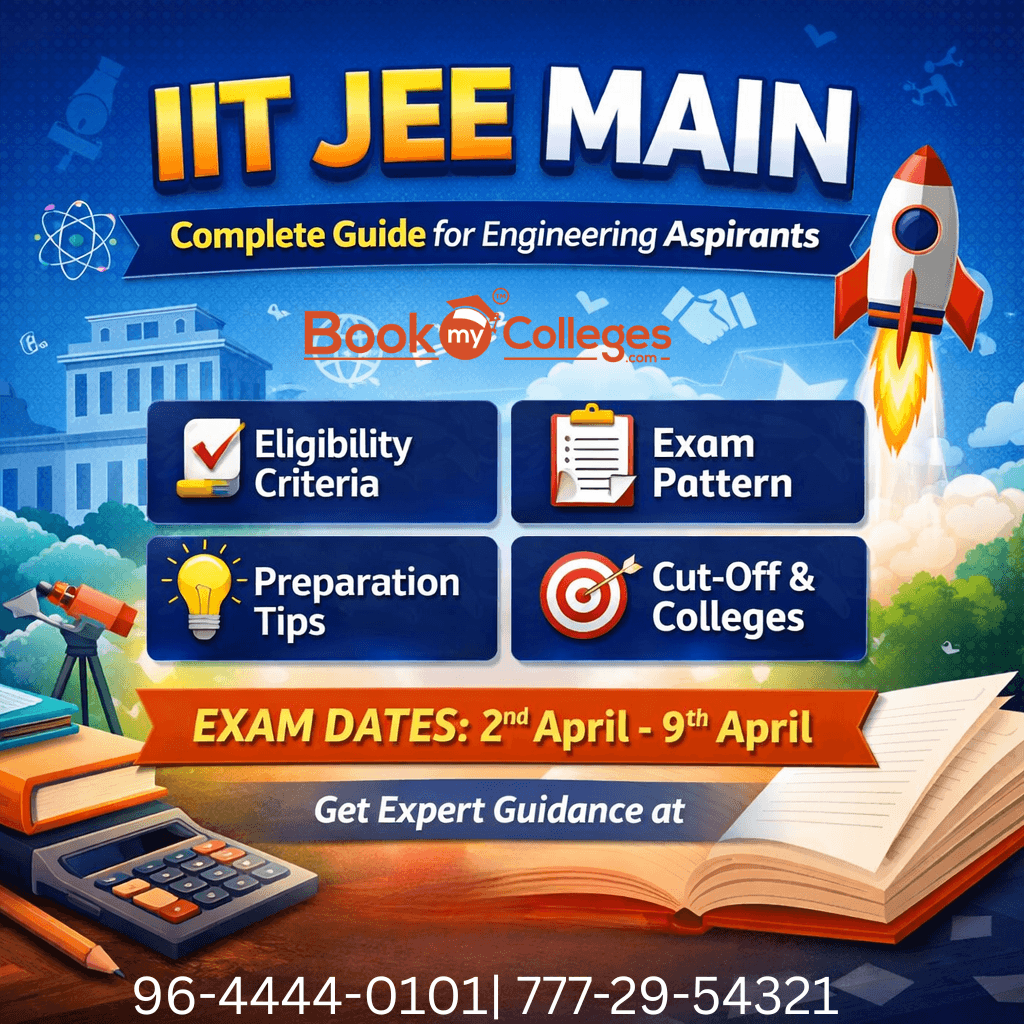
Engineering continues to be one of the most sought-after career paths in India, and for students targeting top institutes, the journey begins with IIT JEE. Known for its competitiveness and depth, IIT JEE is not just about clearing an exam—it’s about proving your conceptual clarity, consistency, and problem-solving ability.
If you're planning to appear for JEE Main or JEE Advanced, this detailed guide will help you understand everything—from exam dates and eligibility to preparation strategy and expert tips.
Understanding IIT JEE: Overview
The Joint Entrance Examination (JEE) is conducted in two stages:
-
JEE Main – First stage for admission into NITs, IIITs, and other top colleges
-
JEE Advanced – Second stage for admission into IITs
You must qualify JEE Main to appear for JEE Advanced, making it the most crucial first step.
JEE Main Exam Dates & Schedule
Planning your preparation starts with knowing the exam timeline.
JEE Main Session 1 (January Attempt)
-
Typically conducted in January
JEE Main Session 2 (April Attempt)
-
Expected Dates: April 2 to April 9
Students can appear in one or both sessions. The best score is considered for ranking, which gives you a major advantage.
JEE Advanced Exam Date
Once you qualify JEE Main, the next step is JEE Advanced.
-
Expected Exam Date: May (usually last week)
Only top-ranking candidates (around 2.5 lakh) from JEE Main are eligible to appear for this exam.
JEE Main: The First Step Towards Top Engineering Colleges
JEE Main is conducted by the National Testing Agency (NTA) and serves two purposes:
-
Admission to NITs, IIITs, and CFTIs
-
Qualification for JEE Advanced
Key Features
-
Computer-based exam
-
3 subjects: Physics, Chemistry, Mathematics
-
Total marks: 300
-
Duration: 3 hours
Multiple attempts make it student-friendly compared to many other competitive exams.
JEE Advanced: Gateway to IITs
JEE Advanced is more difficult and concept-driven compared to JEE Main.
Highlights
-
Two compulsory papers
-
No fixed pattern
-
Focus on analytical thinking
This exam tests how well you understand concepts—not just how much you have studied.
Eligibility Criteria
For JEE Main
-
Must have passed or be appearing in Class 12
-
Physics, Chemistry, Mathematics are mandatory subjects
For JEE Advanced
-
Must qualify JEE Main
-
Must be among top rankers
-
Limited attempts allowed
Exam Pattern (Detailed)
JEE Main Pattern
-
3 sections: Physics, Chemistry, Mathematics
-
90 questions total
-
MCQs + Numerical-based questions
-
Negative marking applicable
JEE Advanced Pattern
-
2 papers (Paper 1 & Paper 2)
-
Includes MCQs, numerical, and match-the-following
-
Marking scheme varies
JEE Syllabus Breakdown
The syllabus is based on Class 11 and 12.
Physics
-
Mechanics
-
Thermodynamics
-
Electrodynamics
-
Optics
-
Modern Physics
Chemistry
-
Organic Chemistry
-
Inorganic Chemistry
-
Physical Chemistry
Mathematics
-
Algebra
-
Calculus
-
Trigonometry
-
Coordinate Geometry
High-Weightage Topics
Physics
-
Laws of Motion
-
Current Electricity
-
Modern Physics
Chemistry
-
Chemical Bonding
-
Thermodynamics
-
Organic Reactions
Mathematics
-
Calculus
-
Probability
-
Matrices & Determinants
Smart Preparation Strategy
1. Focus on Concepts First
Start with NCERT and build strong fundamentals.
2. Follow a Structured Study Plan
Consistency matters more than studying long hours occasionally.
3. Practice is Key
Solve:
-
Previous year papers
-
Mock tests
-
Topic-wise questions
4. Master Time Management
Train yourself to solve questions within time limits.
5. Regular Revision
Make short notes and revise weekly.
6. Analyze Mock Tests
Don’t just attempt—analyze mistakes and improve.
Best Books for Preparation
Physics
-
HC Verma
Chemistry
-
NCERT
-
OP Tandon
Mathematics
-
Cengage
-
Arihant
Stick to limited resources and revise multiple times.
Common Mistakes to Avoid
-
Ignoring NCERT
-
Skipping revision
-
Not solving mock tests
-
Poor time management
-
Studying without a plan
Last-Minute Preparation Tips
As exam dates approach:
-
Focus on revision
-
Avoid new topics
-
Practice mock tests
-
Revise formulas daily
-
Stay calm and confident
Why Proper Guidance Matters
Many students prepare for JEE, but not all succeed. The difference often lies in guidance.
With expert support:
-
You get a clear roadmap
-
Doubts are solved faster
-
Preparation becomes more structured
Career Opportunities After JEE
Clearing JEE opens doors to:
-
IITs
-
NITs
-
IIITs
These institutes offer:
-
Strong placements
-
Global exposure
-
High career growth
Is IIT JEE Really Difficult?
Yes—but it’s absolutely crackable.
With the right strategy, consistency, and mindset, thousands of students achieve their dream every year.
Conclusion
IIT JEE is not just an exam—it’s a journey that builds discipline, confidence, and analytical thinking.
Start early, stay consistent, and focus on understanding concepts. With the right preparation strategy, success is definitely achievable.
Call to Action
Still confused about JEE preparation, exam dates, or college selection?
👉 BookMyColleges helps you with:
-
Expert counseling
-
College selection
-
Admission guidance
Take the right step today and move closer to your dream engineering college.
Frequently Asked Questions (FAQs) About IIT JEE
1. What is the difference between JEE Main and JEE Advanced?
JEE Main is the first stage of the IIT JEE exam and is conducted for admission into NITs, IIITs, and other engineering colleges. JEE Advanced is the second stage and is required for admission into IITs. Only students who qualify JEE Main are eligible to appear for JEE Advanced.
2. How many times can I attempt JEE Main and JEE Advanced?
JEE Main can be attempted multiple times in a year (usually two sessions). Students can appear in both sessions, and the best score is considered.
JEE Advanced, however, can generally be attempted only twice in two consecutive years.
3. What are the exam dates for JEE Main and JEE Advanced?
JEE Main is typically conducted in two sessions:
-
Session 1: January
-
Session 2: April (expected between April 2 to April 9)
JEE Advanced is usually conducted in May (last week) for candidates who qualify JEE Main.
4. Is NCERT enough for JEE preparation?
NCERT books are essential and form the base of JEE preparation, especially for Chemistry. However, for Physics and Mathematics, students should also practice advanced-level questions from reference books to strengthen problem-solving skills.
5. What is the difficulty level of IIT JEE?
IIT JEE is considered one of the toughest exams in India. JEE Main is moderate in difficulty, while JEE Advanced is highly challenging and focuses on conceptual understanding and application.
6. How much time is required to prepare for IIT JEE?
Ideally, students should start preparing at least 1.5 to 2 years in advance. However, with proper strategy and consistency, even one year of focused preparation can yield good results.
7. Can I crack IIT JEE without coaching?
Yes, it is possible to crack IIT JEE without coaching. Many students succeed through self-study by using the right books, online resources, mock tests, and disciplined study plans.
8. Which subjects are most important for scoring high in JEE?
All three subjects—Physics, Chemistry, and Mathematics—are equally important. However, scoring well often depends on your strongest subject, so students should balance preparation across all subjects.
9. What are the best books for JEE preparation?
Some of the most recommended books include:
-
Physics: HC Verma
-
Chemistry: NCERT, OP Tandon
-
Mathematics: Cengage, Arihant
Students should avoid using too many books and focus on revising selected resources thoroughly.
10. What should I focus on in the last month before JEE?
In the final month:
-
Focus on revision
-
Practice mock tests regularly
-
Strengthen strong topics
-
Avoid starting new chapters
-
Maintain a healthy routine
11. What rank is required to get into IITs?
The required rank depends on the IIT, branch, and category. Generally, a top rank in JEE Advanced is required to secure admission into top IITs and popular branches like Computer Science.
12. How important are mock tests for JEE preparation?
Mock tests are extremely important as they:
-
Simulate real exam conditions
-
Improve time management
-
Help identify weak areas
-
Boost confidence
Students should regularly analyze their mock test performance to improve.
For More Information call us: 96-4444-0101 | 777-29-54321
Email us: ashita@bookmycolleges.com
visit us: bookmycolleges.com